──── Deterministic harmonic lattice classification
A shared scale for pharmaceutical classification across six target families.
DHLC ranks drug candidates on one dimensionless axis, whether the target is an ion channel, ligand-gated receptor, or GPCR.
No statistical training. No per-target curve fitting. The method maps standard pharmacological measurements into activity zones using a fixed parameter package and a dual-mode rule for multi-target compounds.
02 · The approach
Drug discovery treats each target class on its own scale.
Aripiprazole was misclassified by Random Forest with RDKit descriptors in 50 out of 50 random seeds.
From the validation benchmark: no tested seed recovered the right answer from structural features alone.
02 · The approach
Map measurements to a shared axis, classify by zone.
DHLC maps standard pharmacological measurements, including half-activation voltage shifts, EC50 fold-shifts, and binding affinity changes, into a dimensionless displacement value.
Compounds land in one of five activity zones. The boundary structure is derived from the HCE framework rather than tuned to a training set, and a dual-mode multi-target rule separates distributed synergy from dominant-primary activity.
Five activity zones
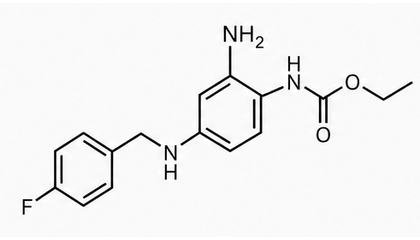
01
Noise floor
Activity indistinguishable from background assay variability.
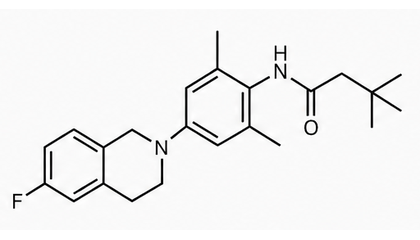
02
Subthreshold
Detectable engagement below standalone therapeutic effect.
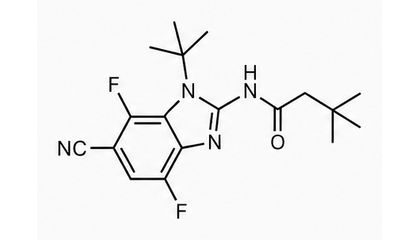
03
Basin entry
Lowest zone with consistent therapeutic activity.
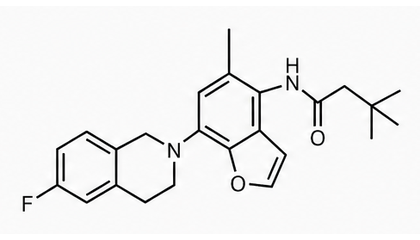
04
Full capture
Strong primary-target engagement for standard therapeutics.
05
Destabilization
Excessive engagement, tool-compound or toxin regime.
03 · Validation
Two independent stages, both passed.
The retrospective set establishes that the method resolves the cases it was designed to handle. The prospective blinded study tests whether the locked baseline generalizes to novel compounds.
01
Retrospective development set, 136 compounds across six families
Bounded refinement under a strict no-regression guardrail improved concordance from the locked baseline to the final development-set result.
Concordance progression
Step 0
Baseline configuration
96.3%
131 of 136 concordant
Step 1
Threshold refinement
97.8%
133 of 136 concordant; atenolol and cetirizine resolved
Step 2
Dual-mode rule
100%
136 of 136 concordant; multi-target edge cases resolved
02
Prospective blinded validation, 60 novel compounds
The analyst received de-identified compound codes, family assignments, and pharmacological parameter values. Compound names, structures, clinical status, and multi-target flags were withheld until after hashed prediction submission.
Protocol and audit signals
88.3%
concordance, 53 of 60
Novel compounds
60
Embedded controls
5
95% CI
77.8-94.2
80%
Study controls
Protocol and audit signals
Control
Purpose
Status
De-identified compound packet
Prevent identity leakage into classification
complete
SHA-256 hashed predictions
Lock predictions before unblinding
complete
Encrypted code mapping
Retain audit trail from code to identity
retained
No prospective feedback
Prevent optimization against validation cohort
enforced
Interpretation
The 100% retrospective result is not the headline accuracy claim.
It represents the optimized development-set result under a no-regression guardrail. The cleaner generalization signal is the prospective-locked blinded result: 88.3% concordance on 60 novel compounds.
04 · Comparison against standard ML
Standard classifiers fail on a specific structural pattern.
Random Forest and Support Vector Machine classifiers were tested across matched inputs, ECFP4 molecular fingerprints, and RDKit physicochemical descriptors. Errors concentrated on multi-target compounds.
Random Forest, RDKit
Aripiprazole misclassified in 50 of 50 seeds
Random Forest, ECFP4
Zone accuracy 63.2%
SVM, matched inputs
Failed on amiodarone
Scope note
This comparison is intentionally narrow.
Graph neural networks, drug-target-interaction-aware models, and large pre-trained chemical models were not tested in this benchmark. The comparison establishes that the specific baselines tested did not eliminate multi-target failures.
05 · Coverage
Six target families, one shared axis.
DHLC has been validated across major small-molecule target classes in neuroscience and cardiovascular pharmacology.
Voltage-gated K+
Kv7
Voltage-gated Na+
Nav1.x
Ligand-gated Cl-
GABA-A
Voltage-gated Ca2+
Cav L-type
Hyperpolarization-activated
HCN
G-protein-coupled
GPCR
06 · Applications
Four ways the method changes a workflow.
A shared pharmacological axis and a dual-mode multi-target rule enable comparisons that are difficult under target-by-target scoring.
Lead prioritization
Multi-target characterization
Drug repositioning
Safety signal detection
07 · Independent review and IP
External validation, defended filing position.
DHLC sits behind a defended IP perimeter and independently audited validation work.
07 · Independent review and IP
Prospective validation and audit conducted by Clark Jones, PhD, pharmaceutical scientist and founder of CJ Scientific LLC.
Clark Jones received the de-identified compound packet, executed the predictions, hashed the result file, and conducted the retrospective audit and prospective unblinding.
Dr. Jones was paid to conduct the blinded analysis. Compensation was not tied to outcomes, and he holds no financial interest in HCE. A manuscript reporting methodology and results is in preparation.
Intellectual property
A pending U.S. patent portfolio covers the methodology end to end.
The portfolio covers cross-family screening, dual-mode multi-target classification, no-regression optimization methods, and deployed classifier system architecture.
- Licensing discussions with pharmaceutical and biotech partners
- Evaluation partnerships on partner compound sets
- Co-development for additional target families
- Collaborative prospective validation studies
08 · Engage